
What Would You Miss?

I only recently realised something that should have been obvious: some care home managers - and some care companies - are not aiming for Outstanding.
They’re aiming for a step below.
Just enough to scrape a Good.
It’s not because they don’t understand what Outstanding looks like. Most of them do. It’s because they’re businesses, and Outstanding usually costs more. It means better kit, yes - but more importantly, it means giving people genuine control over how they live their lives.
In brochures, care homes talk endlessly about ‘promoting independence’. When you scratch the surface that often turns out to mean: tea or coffee?
The same goes for ‘activities’.
The very idea is out of date - a relic from another era.
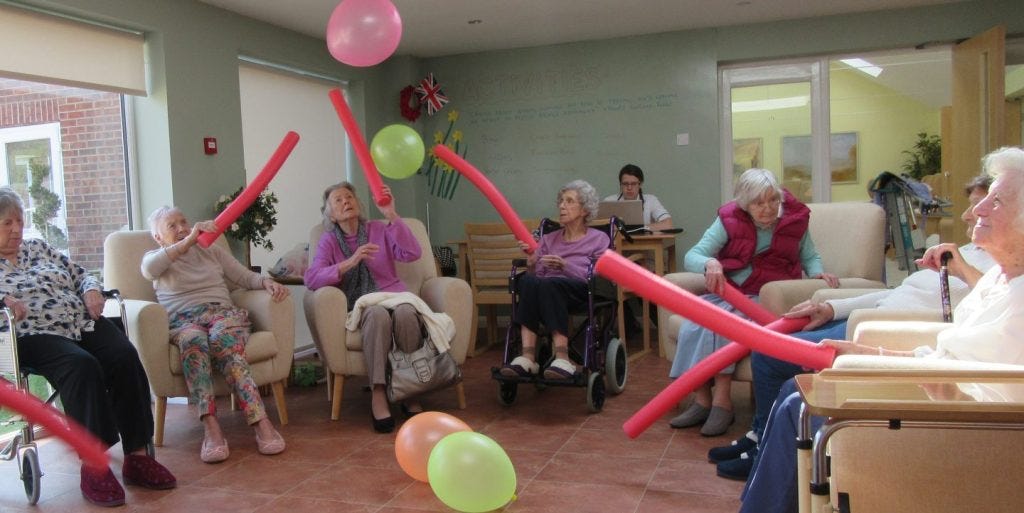
Back in 2006, I developed and ran a project that deliberately moved away from filling time with colouring books, quizzes, and baking biscuits. Instead, we focused on giving people the support they needed to live the lives they wanted.
If someone wanted to spend the day in bed, fine.
If they wanted to go to the pub, also fine.
If they fancied a walk, making their own lunch, cleaning their room, or helping in the garden - great.
My mother, staunchly independent and deeply resistant to the idea of care, simply stopped eating. The care home manager had no ideas. In reality, all that was needed was to help her make her own lunch - always fishcake sandwiches - a couple of times a week.
One man, a former boxer, spent a couple of hours a week sparring with lads at a local gym. He presented trophies. They adored him - and he loved every minute. We took people fishing, to betting shops, and we arranged for one woman to have her first ever martini.
It wasn’t chaotic. Everything was carefully planned.
It wasn’t unsafe.
And it didn’t cost much more.
In fact, we scrapped the ‘activity coordinator’ role altogether and trained all staff to support meaningful activity. The result? More staff genuinely helping people to live their lives, and every single one of them said it made their job more rewarding and fun.
So why have care homes slipped back?
Two reasons.
First, while it doesn’t cost much more, it does cost something.
Second - and this is the bigger one - it requires vision, effort, and leadership.
Some managers simply don’t want to do it. It’s easier to stick with what they know. Safer. More predictable. Less work.
But ask yourself this:
How many of you genuinely look forward to a future where colouring books and bingo are the highlights of your week?
If you moved into a care home tomorrow, what would you miss?
Not “activities”.
Life.
A chat with a friendly cashier in your favourite shop.
Popping out for an ice cream.
Deciding, on a whim, how to spend your day.
That’s the standard we should be designing care around.
Great idea!